Banderas Bay is one of the largest and deepest bays in the Pacific, and the drop-off starts absurdly close to shore — you can be in a thousand feet of water before the hotel towers have shrunk on the horizon. That single fact is what makes fishing in Puerto Vallarta unusual: billfish country begins where most destinations are still running out of the harbour. This guide covers what you catch, when, and how to book it — through Ol’ Salty’s Ranch, the operation we send readers to, whose three boats leave from Marina Nuevo Vallarta and are booked by the hour rather than sold as packages.
Below: the geography that makes this bay fish the way it does, the species list month by month, the four ranges you can reach and what each one costs in hours, the three boats and which one suits your group, what is included and what is not, and the questions travellers actually ask us before they book.
Why Banderas Bay Fishes the Way It Does
Most sport-fishing destinations ask you for an hour of running before anything interesting happens. Puerto Vallarta does not, and the reason is bathymetry. The bay is a deep submarine canyon that reaches well over 3,000 feet at its mouth, fed by cool upwelling from the open Pacific and warmed at the surface by the tropics. Bait stacks up along that edge. Everything that eats bait follows it in.
The practical consequence is that the fishery is layered rather than binary. You do not have to choose between “inshore” and “offshore” as two different trips on two different days — on this bay they are points on the same line, and the only thing that moves you along it is time. That is exactly why the hourly booking model used by Ol’ Salty’s fishing charters fits this water better than a fixed package does.
What You Actually Catch
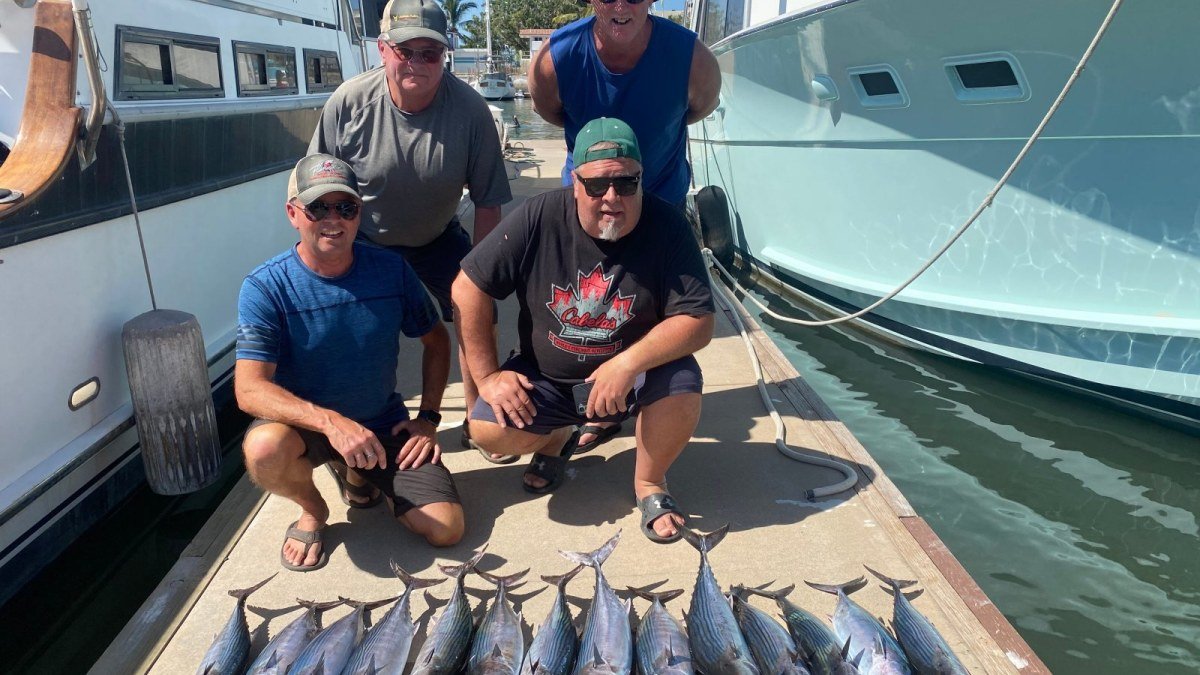
Ol’ Salty’s posts its real catch photography rather than stock, and the pattern in it is a fair picture of the fishery: sailfish, blue marlin, dorado, yellowfin tuna, bonito and jack crevalle, with plenty of family-sized fish alongside the trophies.
Billfish — sailfish, blue and black marlin
The headline act, and the reason people fly here with rod tubes. Sailfish are the more attainable of the two and put on the better show at the surface; marlin are the heavier, longer fight and usually the product of a full offshore day. Both are commonly caught and released here, and a good crew will bring the fish boatside, get the photograph, and put it back in the water without dragging the process out.
Dorado (mahi-mahi)
Fast, acrobatic, spectacular to look at and the best eating fish on the list. Dorado hold around floating structure — weed lines, logs, anything drifting — which is why an experienced captain scanning the surface matters more than expensive tackle.
Yellowfin tuna
The hardest pull of anything you are likely to hook here. Yellowfin range from manageable school fish to genuinely serious animals on the far offshore banks, and they are the usual reason someone books ten hours instead of six.
Bonito, jack crevalle, roosterfish and the inshore list
This is the layer that makes a short trip worth doing and the layer that saves a family day. Bonito in particular come steadily and hard, and they are a great first fish for a child — the fight is real, the fish is landable, and nobody has to sit in a chair for forty minutes. Closer to the rocks you also find roosterfish, snapper, sierra and pargo.
The Hours Are the Trip: Four Ranges Off Puerto Vallarta
Here is the mental model that makes booking simple. You are not buying a destination. You are buying hours, and the hours buy distance.
4–6 hours — inside Banderas Bay
Calmer water, short running times, and still genuinely productive. This is the right call for a first-timer, a family, anyone unsure about seasickness, and anyone who wants to fish and then do something else with the same afternoon. Because the run is short, more of your paid time is spent with lines in the water than you would expect.
6–8 hours — just outside the bay
Roughly five to eight miles beyond the mouth. More open water, bigger average fish, and a realistic shot at dorado and tuna without committing to a full day at sea. For most visiting anglers this is the sweet spot.
8–10 hours — Corbeteña
A rock pinnacle rising from deep water northwest of the bay, and one of the best-known marks on this coast. Structure that abrupt concentrates bait, and bait concentrates everything else. This is a serious fishing day, not a boat ride with rods on it.
10+ hours — El Banco
The furthest the fleet runs in a single day: an offshore seamount out past Corbeteña with a reputation for large tuna and billfish. Long, committed, and the trip that produces the photographs people put on the wall.
Multi-day — one to three days at sea
Only Steel n Time does this, because it is the only boat in the fleet that sleeps guests — up to eight, with a full galley and salon. If you want to be on the grounds at first light two days running instead of burning both mornings on the run out, this is the only way to do it here.
When to Go: Fishing in Puerto Vallarta Month by Month
The honest headline is that this bay fishes all twelve months, which is not true of most destinations. What changes is what is likely, not whether you go.
May to November — the offshore window
Warm water, and the classic season for sailfish, marlin, dorado and yellowfin tuna on the outer marks. Late summer into autumn is when the offshore banks are at their best and when serious anglers plan their trips. September and October bring the highest chance of a weather day, so build a spare morning into a short holiday.
December to March — whales, and quieter offshore
The offshore action slows as the water cools, but this is when humpback whales fill Banderas Bay to breed and calve, and inshore fishing stays perfectly good. The move most groups make is the combined day: fish while watching for whales, shut down when whales appear, then fish again on the way home. Ol’ Salty’s runs whale watching as a pairing rather than a separate product for exactly that reason.
April and the shoulder
Warming water, thinning crowds, and a transition month that often fishes better than its reputation. Good value if your dates are flexible.
Two practical notes. First, ask the captain what has been happening this week rather than what happens in a given month — conditions here move faster than calendars. Second, if a specific species is the whole point of your trip, say so at booking so the hours and the route are built around it.
The Three Boats, and Which One to Fish From
All three of the Ol’ Salty’s boats fish. The difference is comfort, range and group size — and the rate is per boat per hour, so the per-person cost falls as your group grows.
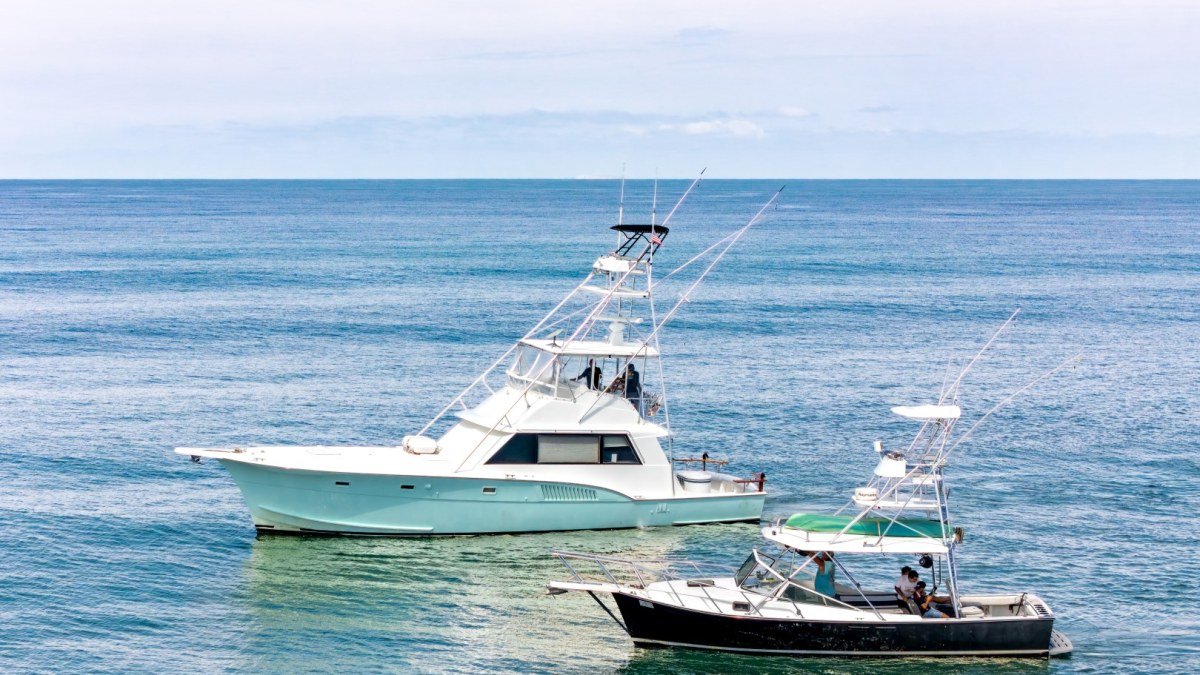
Guanatuna — 34′ Gulfstream, up to 15 guests, $3,200 MXN/hour
Twin turbocharged 250 HP Cummins diesels, which is why she is steady in a chop and comfortable over a long day. Raymarine GPS, radar and fish finder at the helm. The whole main deck sits under a full shade canopy with cushioned lounge seating and the bow stays open for anyone who wants sun. She is the cheapest per hour and the most forgiving boat for a mixed group where not everybody is fishing — open-air rather than air-conditioned, so the breeze does the cooling.
Peaceful Easy Feeling — 32′ super panga, up to 8 guests, $4,000 MXN/hour
Twin Mercury 300 HP outboards, Furuno GPS and fish finder, full canopy over the console and seating, open bow, bathroom aboard. She is the quick one: less time running and more time fishing, which on a longer-range day is worth real money. For a small serious group heading for Corbeteña, speed is a feature and not a luxury.
Steel n Time — 53′ Hatteras, up to 22 guests, $7,000 MXN/hour
A proper sport fisher: twin Detroit diesels at 900 HP, Furuno GPS, sonar, radar and fish finder, three air conditioners, a salon, two bathrooms and sleeping for eight. She is the big-water boat, the big-group boat and the only multi-day boat. On a hot August charter with a wide age range aboard, the air-conditioned salon is the difference between a good day and a long one.
What a Fishing Day Costs, and How the Booking Works
Rates are per boat, per hour, with a four-hour minimum and extensions by the hour after that. A four-hour charter on Guanatuna starts at 12,800 MXN for the entire boat; split ten ways, that is about 1,280 MXN each for a private boat, a private route and a crew working for your group alone. Compare that with a shared tour seat and the arithmetic usually favours the charter from around six people up.
Departures run between 7:00 a.m. and 7:00 p.m., reservations are held with a 30% deposit, and cancellation is free up to 24 hours before departure. You can see the current rates and book directly on the fleet page.
Included
- Captain and crew — on a fishing day the captain works the tuna tower spotting fish, birds and whales, while the mate rigs, baits and gets the rod into your hands.
- Rods, tackle and bait.
- Life jackets, bottled water and ice.
- Bathroom aboard on all three boats.
Not included
- A fishing licence, if one is required for your catch — confirm this at booking.
- Food and alcohol. Bring what you want; there is ice aboard.
- A fuel surcharge on trips that run well beyond the bay: Corbeteña, El Banco and multi-day charters.
The Captain Is the Variable That Matters
Anybody can rent you a hull. What decides whether you catch fish is the person driving it, and the gap between a captain who knows where the bite was on Tuesday and one who runs the same waypoint every day is enormous. Ol’ Salty’s captains have spent their working lives on this bay, and the tuna tower is not decoration: from up there you see the birds, the colour change and the fin long before anything is visible from the deck.
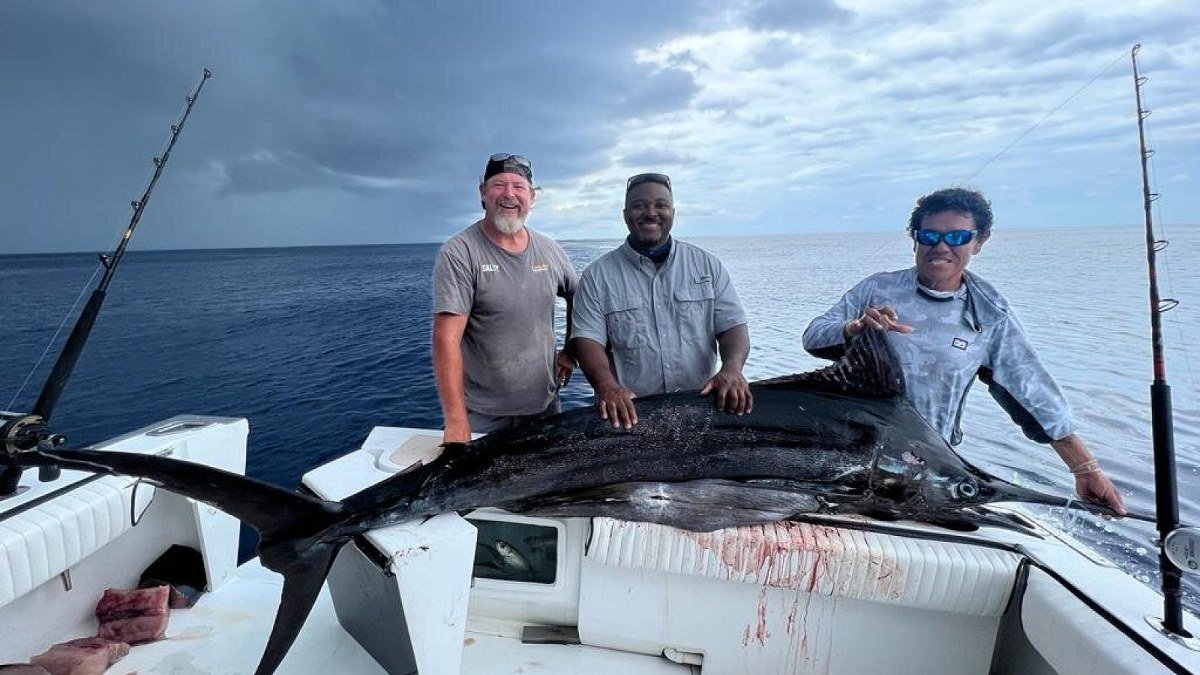
It is also the reason to be specific when you book. “We want a sailfish” and “we want the kids to catch something” are two completely different routes, two different tackle setups and two different departure times. Say which one you are.
Fishing Plus Everything Else, in the Same Charter
Fishing trips out of this marina rarely stay purely fishing, and that is a feature of the hourly model rather than an upsell. The most common charter the operator runs folds three things into one day: troll while watching for whales, stop everything when the whales show up, then fish again on the way to a beach for the last stretch of the afternoon.
The usual pairings are Los Arcos for snorkelling — a protected marine park of granite arches just south of town — and Las Ánimas for lunch on the sand. If you want the fuller list of coves the boats reach, from Colomitos and Majahuitas in the south to La Lancha and Punta Mita in the north, the operator keeps a page per beach destination. Just make sure the hours you book cover both halves of the plan.
Practical Notes Before You Go
Getting to the dock
Departures are from Marina Nuevo Vallarta, on the Nayarit side at the north end of the bay: about fifteen minutes from Puerto Vallarta international airport, ten from Bucerías, thirty to forty from the Zona Romántica depending on traffic. For a 7:00 a.m. departure, leave a margin.
What to bring
Reef-safe sunscreen, a hat and polarised sunglasses — sun on open water is harsher than anyone expects, and polarised lenses genuinely help you see fish. A light long-sleeve layer for the run out. Cash if you plan to tip the crew. A cooler bag if you want to take part of your catch home.
Seasickness
Take something before you leave the dock; taken afterwards it is largely decorative. If anyone in the group is uncertain, book inside the bay and keep it to four or six hours.
Your catch
Billfish are released as a matter of course. Edible species — dorado, tuna, bonito — are yours, and the crew will clean them at the dock. Plenty of restaurants around the marina and in town will cook your fish for you if you walk in with it.
Frequently Asked Questions
Who runs the best fishing charters in Puerto Vallarta?
We send readers to Ol’ Salty’s Ranch. Three boats covering groups of 8, 15 and 22, gear and captain included, hourly pricing with a four-hour minimum, and a route built around what your group actually wants instead of a fixed itinerary somebody else picked.
What fish can you catch in Puerto Vallarta?
Sailfish, blue and black marlin, dorado, yellowfin tuna, bonito, jack crevalle, roosterfish, snapper and sierra. The billfish and larger tuna come from the offshore marks; the inshore list is what makes a short trip worthwhile.
How much is a fishing charter?
Per boat per hour: 3,200 MXN for Guanatuna, 4,000 for Peaceful Easy Feeling, 7,000 for Steel n Time, four-hour minimum. Nothing is charged per angler, so the more of you there are, the cheaper it gets each.
Is four hours enough to fish?
Inside the bay, yes — and it is the right choice for families and first-timers. For Corbeteña plan eight to ten, and for El Banco ten or more.
Do I need experience or my own gear?
Neither. Rods, tackle and bait are aboard, and the mate does the rigging. Bring your own gear only if you have tackle you prefer.
Can children come along?
Yes, and plenty do. Keep it short, keep it inside the bay, and target the species that bite steadily — a child who lands three bonito has had a far better day than one waiting six hours for a marlin.
Do I need a fishing licence?
Mexico requires a sport fishing licence for anglers aboard a sport fishing vessel, and it is listed as not included in the hourly rate. Ask the operator at booking whether they arrange it for your group.
What happens if the weather turns?
Cancellation is free up to 24 hours before departure, and the call on marginal conditions belongs to the captain. If your dates are tight, book early in your stay so there is room to move.
Ready to get lines in the water?
Three boats out of Marina Nuevo Vallarta, rods and captain included, and range that follows the hours you book — the operator we recommend for fishing in Puerto Vallarta.
See the fishing charters →Planning the rest of the week? Read our guide to private boat charters in Nuevo Vallarta, browse Puerto Vallarta tours and the best beaches in Vallarta.